


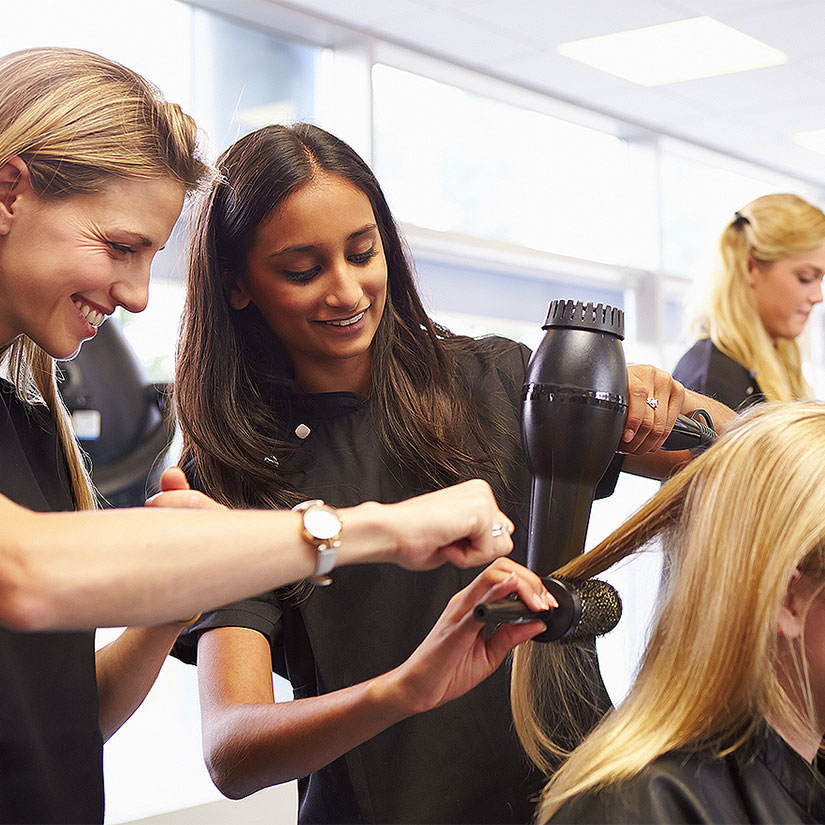
A career change at 40 is ordinary. In Indeed’s Career Change Report, published in 2019, 49 percent of the 662 full-time U.S. workers surveyed had made a dramatic career shift, and the respondents’ average age was 39. Beauty school trains for four licensed careers: cosmetologist or hairstylist, esthetician, barber, and nail technician. Switching to beauty takes three moves: choose a license, train on a schedule that protects your income, and pass the state exam. At Tricoci University of Beauty Culture, the Esthetics Program takes about 5 to 6 months full time or about 9 months at night, and the Cosmetology Program takes about 10 to 12 months full time or about 17 to 20 months at night. Neither license requires a college degree.
A Career Change at 40 Is Common
The Indeed survey describes people who plan. Its findings:
- 49 percent of respondents had changed careers, and 65 percent of the rest had considered it.
- 83 percent of career changers planned the move in advance, and they spent an average of 11 months thinking about it first.
- 81 percent left because they were unhappy in their previous job or sector, and 79 percent wanted greater flexibility.
- 58 percent were willing to take a pay cut to switch.
- 88 percent said they were happier after the change.
Illinois’s curriculum rules for cosmetology and esthetics set training hours and subjects, and neither sets an upper age limit. A 40-year-old and a 20-year-old complete the same hours and sit for the same exam.
Career Change at 30 vs. Career Change at 35 or 40
The license is the same at every age. The planning questions change.
A career change at 30 usually comes with the longest runway. Ask whether you can pause work for the full-time schedule. Finishing in 5 to 12 months, depending on the program, puts more working years behind the new license.
A career change at 35 often has to fit around a household. Ask who covers evenings if you take night classes, and whether a 5:30 start works with your commute and childcare.


A career change at 40 brings the most work history. Ask which parts of it transfer: client service, sales, scheduling, and managing people all have a place in a salon or spa.
None of these questions has a right answer by age. A 40-year-old without dependents may choose full time, and a 30-year-old with two children may need nights.
Pick the License That Matches the Work
Choose the program by the services you want to perform.
| Program | Services the license covers | Illinois training hours |
|---|---|---|
| Cosmetology Program | Haircutting, color, chemical services, plus basic skin and nail services | 1,500 |
| Esthetics Program | Skincare, facials, hair removal, makeup | 750 |
Illinois sets those hours in its administrative code: Section 1175.530 for cosmetology and Section 1175.835 for esthetics. Indiana and Wisconsin set their own requirements.
Tricoci University also offers the Barber Program and the Nail Technology / Manicuring Program at select campuses. The programs page lists all five programs, and an admissions advisor can confirm which ones run at your campus.
How to Become a Hairstylist After a First Career
How to become a hairstylist is the same process at 40 as at 20. The cosmetology license covers cutting, coloring, and chemical services, so the route runs through the Cosmetology Program:
- Enroll in a licensed cosmetology program. No college degree is required.
- Complete the state’s training hours. Illinois requires 1,500, and 975 of them cover chemical services, cutting, and styling.
- Pass the state exam. Illinois students can apply at 1,200 hours and take the computerized exam at a PSI test center.
- Apply for the license after the official results letter arrives.
Full time, that path takes about 10 to 12 months of training. At night, it takes about 17 to 20 months.
Time to License by Program and Schedule
Career changers weigh months without full income against months until the new career starts. These are the program lengths at Tricoci University.
| Program | Full time, 37.5 hours a week | Part-time nights, 22.5 hours a week |
|---|---|---|
| Esthetics Program | About 5 to 6 months | About 9 months |
| Cosmetology Program | About 10 to 12 months | About 17 to 20 months |
The state exam follows training. In Illinois, Continental Testing Services lets students apply before graduation: at 1,200 hours under its cosmetology exam instructions and at 600 hours under its esthetician exam instructions. Candidates have 60 days to test after approval, and official results usually arrive within four weeks.
New classes start every 6 weeks, so the decision does not have to wait for a fall or spring semester.
Keep Your Paycheck With Night Classes
The night schedule exists for students who cannot stop working. Classes run from 5:30 to 10:00 and total 22.5 hours a week, which leaves the standard workday open.
- Night classes run at 11 of 15 campuses for both the Cosmetology Program and the Esthetics Program.
- Bloomington, Lafayette, Peoria, and Janesville offer the full-time schedule only.
- Full-time classes run from 9:00 to 5:00, 37.5 hours a week, at every campus.
- Both schedules cover the same curriculum and the same student clinic salon experience. Nights spread the hours across a longer calendar.
Nights keep your income and add months to the calendar. Esthetics at night is the shortest part-time route, at about 9 months.
What Beauty Work Pays in Current Job Postings
Indeed calculates pay from job postings over the past 36 months. These figures are averages of advertised base pay, and they do not predict what any one graduate will earn.
| Role | Average posted pay | Posted range | Salaries in sample |
|---|---|---|---|
| Esthetician, United States | $24.60 per hour | $11.86 to $51.05 | 14.6k |
| Esthetician, Illinois | $25.38 per hour | $15.00 to $53.86 | 498 |
| Cosmetologist, United States | $25.54 per hour | $13.83 to $47.18 | 6k |
Two cautions apply. Indeed lists Chicago cosmetologist postings at $22.95 per hour, below the national average, so check your own city. Posted base pay also leaves out tips and commission, which many salon and spa listings include on top of an hourly rate. Income in a service business grows with a client list, and a new licensee starts building one from zero.
Financial Aid Works Differently for Adult Students
Tricoci University of Beauty Culture is accredited by NACCAS, and students who qualify can use federal financial aid.
Adult students file the FAFSA on their own information. The Illinois Student Assistance Commission’s dependency status guidance for the 2026-27 year treats a student born before January 1, 2003 as independent. An independent student reports their own income, and a spouse’s if married, and does not report parents’ income. Married students and veterans also qualify as independent.
The financial aid team at Tricoci University reviews financial aid options with each applicant before enrollment.
Skills From Your First Career That Carry Over
A first career is an asset in a client-facing trade. The work draws on skills most mid-career adults already use:
- Client service. A consultation is a needs conversation: listen, confirm, recommend.
- Sales and retail. Marketing and merchandising are required subjects in Illinois cosmetology training, and product recommendations are part of client service.
- Scheduling and reliability. A full book depends on showing up and running on time.
- Management. Illinois requires 200 hours of shop management in every cosmetology program, covering bookkeeping, marketing, labor law, and client relations. Former managers and small-business owners will recognize much of that material.
Before pursuing cosmetology, Margo Snopek earned a degree in elementary education. She enjoyed working with people but realized she wanted a career that felt more creative and hands-on. “That realization led me to pursue cosmetology, and it ultimately changed the course of my career in the best way,” she told Career Education Review. Margo graduated from Tricoci University of Beauty Culture in Chicago in 2010 and now co-owns Lux Salon, where she leads a team of nine stylists. Her advice: “If you’re passionate about it, go all in. This career rewards hard work and dedication. Don’t be afraid to start at the bottom.”
Five Steps From Decision to First Day
- Visit a campus. Watch the student clinic salon during service hours and talk with current students.
- Choose the program. Match the license to the work you want: hair, skin, or both.
- Choose the schedule. Full time if you can pause work. Nights if you need the paycheck.
- File the FAFSA and meet with financial aid. Know your aid package before you commit to a start date.
- Pick a start date. New classes begin every 6 weeks.
Talk With an Admissions Advisor
Tricoci University of Beauty Culture has 15 campuses across Illinois, Indiana, and Wisconsin, with new classes starting every 6 weeks. Request information to talk through programs, schedules, and financial aid with an admissions advisor.
 Call
Call Apply
Apply Programs