

Beauty school is the umbrella term for licensed beauty education, covering specialized programs like cosmetology, esthetics, barber, and nail technology. Each program combines classroom instruction with hands-on training and leads to a state licensing exam. A cosmetology school in particular trains across hair, skin, and nails in one broad license, while the other programs each focus on one area. What you actually learn depends on which program you choose, since each one trains you for a distinct part of the beauty industry. Here is what beauty school covers, how long it takes, and what you can expect to learn.
What Is Beauty School
Beauty school is not one single program. It is a category of beauty education made up of several specialized programs, each leading to its own state license. When people ask what beauty school is, they are usually asking about one of four paths: cosmetology, esthetics, barber, or nail technology.
What all beauty programs have in common:
- A required number of training hours set by the state
- A mix of classroom instruction and hands-on training
- A state licensing exam at the end, covering written and practical skills
- A path toward a career as a licensed beauty professional
The specific hours, curriculum, and license differ by program, which is why choosing beauty school really means choosing which specialized program fits your goals. Some students know exactly which path they want before they ever apply; others use beauty school as a broad entry point and specialize once they are working.
Types of Beauty Programs
Here are the main programs offered under the beauty school umbrella:
- Cosmetology program: the broadest license, covering hair cutting, coloring, and styling, plus skin and nail services
- Esthetics: focused on skin care, including facials, hair removal, and makeup application
- Barber: focused on men’s hair cutting, shaving, and grooming services
- Nail technology: focused on manicures, pedicures, and nail enhancements
Some students already know which program fits their interests. Others start with cosmetology because it covers hair, skin, and nails in one broad license, then specialize further after graduation. Choosing between these specialized programs often comes down to how narrow or broad you want your skill set to be starting out. If you are still deciding, our guides on cosmetology vs. esthetics and barber vs. cosmetology break down each path in more detail.


How Long Is Beauty School
How long is beauty school? It depends entirely on which program you choose, since each one has its own state-required training hours.
- Cosmetology: 1,500 hours in Illinois, about 10 to 12 months full time
- Barber: 1,500 hours in Illinois, about 10 to 12 months full time
- Esthetics: 750 hours in Illinois, about 4 to 6 months full time
- Nail technology: 350 hours in Illinois, the shortest of the specialized programs, about 4 months full time
Full-time schedules move through these hours fastest, while part-time and evening schedules stretch the same training over a longer calendar for students balancing work or family. For a deeper look at how the timeline breaks down, see our full guide on how long beauty school takes.
What You Learn in Beauty School
What do you learn in beauty school? Across every program, the training centers on three areas, hair, skin, and nails, though how much of each you study depends on your program. A cosmetology program touches all three, while esthetics, barbering, and nail technology each go deeper on one.
Core skills taught across beauty programs include:
- Hair cutting: cutting, styling, coloring, and chemical services (cosmetology and barbering)
- Skin care: facials, waxing, and makeup application (esthetics and cosmetology)
- Nail technology: manicures, pedicures, and nail enhancements (nail technology and cosmetology)
- Sanitation and safety: disinfection and infection control, required in every program
- Business skills: client consultation, retailing, and salon operations
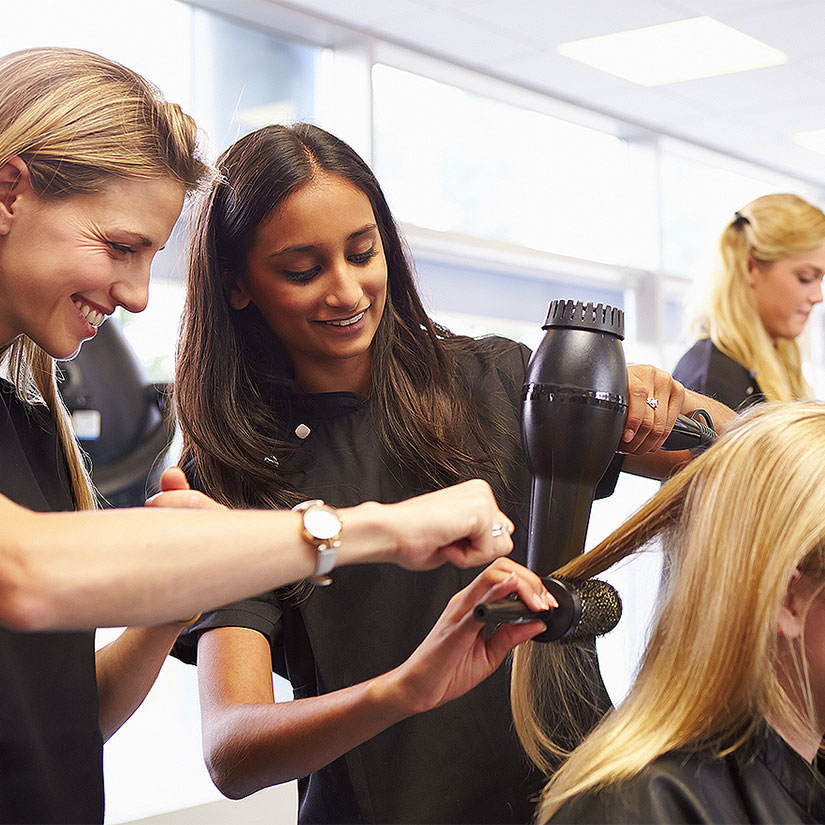
Classroom instruction covers the science and theory behind each service, but the training hours that matter most are hands-on. A program includes a student kit, professional tools, and supervised time on the clinic floor, so skills become real before graduation.
Beauty School Curriculum and Hands-On Training
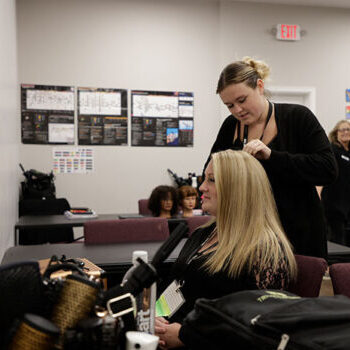
Hands-on training is the core of every beauty program, and it follows a similar progression no matter which path you choose. Across hair, skin, nails, and every other service area, the pattern is the same: practice, then supervised real-world application.
- Foundational practice: students start on mannequins and classmates, learning technique without the pressure of a live client
- Supervised clinic work: students move to the clinic floor, performing real services on real clients under the guidance of experienced instructors
- Specialized practice: students build speed, consultation skills, and confidence in their chosen program’s core services
Classroom instruction lays the foundation, but employers hire on demonstrated skill. That is why beauty school curriculum is built around clinic hours rather than lectures alone.
Getting a Head Start in High School
You do not have to wait until graduation to see what a career in beauty actually looks like. Tricoci University’s NextGen Beauty Camp gives high school students hands on time in a real clinic setting, working across hair, skincare, makeup, and nails under the guidance of licensed instructors, before they ever commit to a program.
Watch the FOX Iillinois story here.
Camps like this are part of Tricoci Forward, the university’s outreach initiative connecting high schoolers to scholarships, campus events, and mentorship well before enrollment. If you are still deciding whether beauty school is the right fit, a program like this is one of the lowest pressure ways to find out.
State Licensing and Becoming a Beauty Professional
Every beauty program ends the same way: a state licensing exam. Passing it is what turns training into a career.
To become a licensed beauty professional, you generally need to:
- Complete your program’s required training hours at an accredited school
- Pass the state licensing exam, covering both written and practical portions
- Apply for your license through your state’s regulatory agency
Accreditation matters here too. A NACCAS-accredited program qualifies for federal financial aid options, including grants and federal student loans, which is not available at unaccredited schools. Once licensed, beauty professionals can work in salons, spas, barbershops, and independent practice across the beauty industry, or pursue specialized programs and advanced certifications to expand their services further. The license is what makes the training count: without it, none of the hours in beauty school translate into paid, legal work in the field.
Find Your Path at Tricoci University
Now that you know what beauty school actually covers, the next step is choosing the program that fits your goals. Tricoci University of Beauty Culture offers cosmetology, esthetics, barber, and nail technology programs across Illinois, Indiana, and Wisconsin, with hands-on clinic training and state board exam preparation built into every path. Request information to talk with an admissions advisor about which program is right for you and the campus nearest you.
 Call
Call Apply
Apply Programs