

The esthetics state board exam is the final step between finishing school and working as a licensed esthetician. Most states build their test around the National-Interstate Council of State Boards of Cosmetology (NIC), the body that writes the standard written and practical exams used across the country. Pass it, and your state issues the license that lets you work.
The exam intimidates a lot of students, but it rewards preparation more than raw talent. It checks whether you can perform skin care safely and correctly, the same skills you build throughout an esthetics program.
What Is the Esthetics State Board Exam
The esthetics state board exam is the licensing test every aspiring esthetician must pass. Most states require two parts: a written, or theory, exam and a hands-on practical exam. Some require only one, and a few use their own version, but the NIC model sets the standard most boards follow.
The NIC writes and maintains the national exams, while each state board of esthetics decides which parts to require and how to administer them. States contract testing vendors such as PSI, Prov, or Prometric to deliver the exams, so the registration process and the exam-day setup vary by location. The constant is the goal: the test confirms you can work on clients safely before a board grants your license.
Because requirements differ, the first step is always the same. Find your state board of esthetics, read its current candidate information bulletin, and confirm which exams you need before you build a study plan. The bulletin also explains how scores are reported and what happens if you need to retake a portion, useful to know early so a single setback does not stall your path to licensure.
The Written (Theory) Exam
The written exam is multiple choice and tests the knowledge behind the work. Under the current NIC theory format, the bulletin lists roughly 110 questions, with about 100 scored and the rest unscored pilot items, though your state may differ, so confirm the count in your own bulletin.


Content centers on the science and safety of skin care. Expect questions across these areas:
- Infection control, sanitation, and safety, the most heavily weighted topics
- Skin anatomy and physiology, including the layers and functions of the skin
- Skin conditions and disorders you must recognize and know when to refer
- Basic chemistry, covering products, ingredients, and how they work
- Equipment and procedures, from electrical devices to hair removal
The written exam is timed, so speed matters as much as knowledge. Reading each question carefully while keeping pace is a skill you build through repetition, not something you cram the night before.
The Practical (Hands-On) Exam
The practical exam is where you demonstrate the services you have practiced. Instead of answering questions, you perform tasks at timed stations while examiners watch your technique. Common segments include workstation setup, a basic facial, hair removal, and proper cleanup.
Sanitation is scored throughout, not as a separate section. Examiners watch how you disinfect tools, protect the client, and follow infection control at every step. A flawless facial loses points if you skip a sanitation step along the way.
Examiners are not looking for a luxury spa experience. They want safe, correct procedures performed in order and on time. Students who treat the practical as a demonstration of fundamentals, rather than a performance, tend to do better. The pressure is real, but the tasks are the same ones you repeat throughout esthetician practice in school.
How to Prepare for the State Board of Esthetics
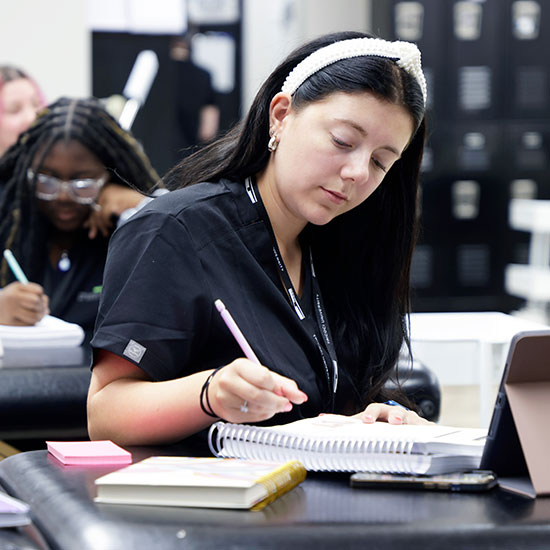
Preparation beats anxiety. The students who pass on the first try treat studying as a routine, not a sprint, and they practice under conditions that match the real exam.
Use an Esthetician State Board Practice Test
Timed multiple-choice repetition is the most reliable way to prepare for the written portion.
An esthetician state board practice test shows you the format, surfaces the topics you are shaky on, and trains you to manage the clock. Take several under timed conditions, score them, and steer your studying toward the weak areas, starting with infection control and safety.
For the practical, rehearse each task on a real model and time yourself so you become comfortable completing the service within the time allowed during the exam.
Master Infection Control and State Law
Sanitation is the single most common reason students lose points on both exams, so make it the foundation of your prep. Drill the disinfection steps until they are automatic. Then review your state’s candidate information bulletin for any state-specific laws and rules for your board tests, since those vary and rarely appear in national study materials.
Common Mistakes to Avoid
Most failures come down to preparation habits, not ability. A few patterns repeat often enough to be worth calling out:
- Letting nerves and time pressure win, when pacing is a skill you can practice
- Skipping sanitation steps under stress, the fastest way to lose practical points
- Waiting too long to confirm state requirements, which can derail registration
- Under-practicing the hands-on portion, often because the written exam gets all the attention
Each of these is avoidable. The fix is the same in every case: start early, practice in realistic conditions, and treat the small procedural steps as seriously as the big ones.
How Tricoci University Prepares You
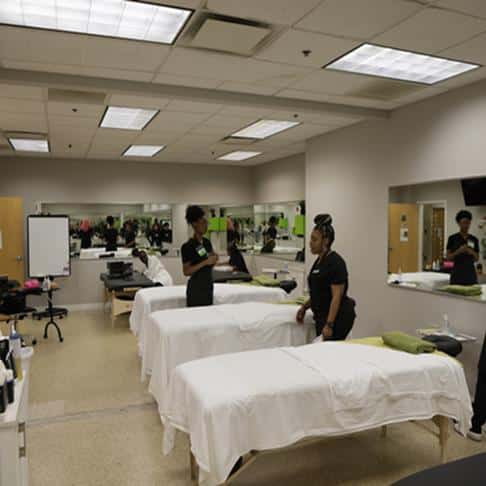
A strong esthetics program builds exam readiness into the curriculum rather than leaving it for the end. Coursework maps to the same content the written exam covers, and the daily routine reinforces the procedures for the practical scores. Students log hundreds of hours of hands-on practice before they ever register to test.
Accreditation signals that a program meets a recognized standard. The National Accrediting Commission of Career Arts & Sciences (NACCAS) is recognized by the United States Department of Education as a national accrediting agency for postsecondary schools of cosmetology arts and sciences.
NACCAS accreditation signifies that a program meets nationally recognized educational standards, while state licensing boards determine whether program hours satisfy licensure requirements, and those hour requirements vary by state.
At Tricoci University of Beauty Culture, esthetics students train in supervised clinics across campuses in Illinois, Indiana, and Wisconsin, performing real services on real clients under instructor supervision. That hands-on time is the best preparation for the practical exam, and it is built into the path to become an esthetician and earn your certification.
Start Your Esthetics Training
Passing the state board starts long before exam day, with the training that prepares you for it. Explore the esthetics program at Tricoci University of Beauty Culture, find a campus near you in Illinois, Indiana, or Wisconsin, and request information to talk with an admissions advisor about start dates.
 Call
Call Apply
Apply Programs