

The national median esthetician salary for skincare specialists was $41,560 as of May 2024. Estheticians in Illinois, Indiana, and Wisconsin all average above that. Where you land within each state’s range comes down to where you work, what certifications you hold, and how your pay is structured.
What Estheticians Earn in Illinois, Indiana, and Wisconsin
According to the Bureau of Labor Statistics (BLS), the national annual salary for skincare specialists as of May 2024 was $41,560 (or $19.98 an hour), with most salaries falling between $13.06 and $23.80 per hour. The median esthetician salaries in Illinois, Indiana, and Wisconsin as of May 2025 tend to be higher than the national median wage.
| State | Median Wage (Hourly) | 10th-75th Percentile Wage (Hourly) | Median Wage (Annual) | 10th-75th Percentile Wage |
|---|---|---|---|---|
| Illinois | $21.79 | $15.00 -$22.77 | $45,330 | $31,200-$47,360 |
| Indiana | $21.37 | $11.75-$25.19 | $44,450 | $24,440-$52,390 |
| Wisconsin | $22.22 | $10.98-$28.68 | $46,220 | $22,830-$59,660 |
These figures reflect base pay only. Tips, commissions, and retail bonuses are separate.
What Actually Moves Your Esthetician Salary
Setting, specialization, and hours worked impact how much an esthetician earns. Part-time schedules are common in the field, and many estheticians work evenings and weekends, which affects how annual figures translate to individual take-home pay.
Where You Work
Medical and spa estheticians work in different environments with different demands. Medical estheticians work in dermatology practices, plastic surgery offices, and medical spas, where clients come for clinical results and the work is more technical. Spa estheticians work in standalone spas, fitness clubs, hotels, and resorts, where atmosphere and experience are part of what clients pay for.
- Day spas and salons may combine a base with commission and tips. A strong, loyal client book at a high-volume spa can close the income gap with medical settings.
- Medical spas, dermatology offices, and plastic surgery offices may offer a higher base with little or no tipping. Most positions require certifications beyond the core esthetics license.
- Hotel and resort spas usually pay hourly plus tips. Pay varies considerably by property tier. A luxury resort spa and a mid-range hotel spa are not the same market.
- Self-employed and booth rental estheticians keep everything above their rental fee. Income depends on client volume, pricing, and overhead management.
Experience and Specialization
Advanced certifications in dermaplaning, chemical peels, microdermabrasion, LED therapies, and laser treatments are standard requirements for medical esthetician roles and open access to higher-paying clinical settings.


Medical esthetics requires certifications beyond the core license. Laser technician training, advanced peel credentials, and microneedling certs are standard add-ons, along with working under physician supervision.
The Esthetics Program includes pathways to several of these advanced certifications for students who want to pursue clinical work after graduation.
Pay Structure: Hourly, Commission, and Booth Rental
Many estheticians work part-time or irregular hours, which means pay structure matters as much as hourly rate. How your compensation is set up determines how much a slow week or a reduced schedule actually costs you.
- Hourly pay gives you a predictable check regardless of how many clients you see that week. It’s the most common structure in chain spas and medical settings.
- Commission ties your earnings to services performed and retail sold. It rewards a strong book and good sales skills, but slow weeks hit harder.
- Booth rental means you pay a flat weekly or monthly fee to the salon and keep everything above it. You set your own hours and manage your own books. Listings consistently note that booth rental works best for estheticians who already have an established client base.
Tipping norms differ by setting. In day spas and salons, gratuity of 15–20% is standard and adds meaningfully to take-home pay.
In medical and clinical settings, tipping is often discouraged or prohibited for licensed medical staff, though estheticians performing non-medical services may still receive tips depending on the facility’s policy. When comparing two offers, total compensation matters more than the base rate.
Esthetician Licensing Requirements in IL, IN & WI
Every state requires a license to practice as an esthetician. Training hours, exam format, and renewal schedules vary across Illinois, Indiana, and Wisconsin.
| State | State Min. Hours | Exam | Exam Fee | App Fee | Renewal | Renewal Fee |
|---|---|---|---|---|---|---|
| Illinois | 750 | Written only | $127 | $45 | Every 2 yrs; 10 CE hrs | $50 |
| Indiana | 700 | Written only | $59 | $40 | Every 4 yrs; no CE hrs | $40 |
| Wisconsin | 450 | Written; practical at school level | Wrtten: ~$137 Practical: ~$177 |
— | Every odd yr, Mar 31; no CE hrs | $11 |
Tricoci University exceeds the state minimum in both Indiana and Wisconsin. Those additional hours go toward supervised clinic time, not additional classroom instruction. Full-time students in Illinois and Indiana complete 750 hours in six months. Part-time takes nine. Wisconsin students complete 600 hours on a similar timeline. New classes start every six weeks.
What to Look for in a Training Program
The school you choose affects whether you can sit for your licensure exam, whether you qualify for financial aid, and how prepared you are on your first day of work.
Accreditation and Financial Aid Access
National Accrediting Commission of Career Arts and Sciences (NACCAS®) accreditation signifies that a program meets nationally recognized educational standards and is required to access federal Title IV financial aid. State licensing boards determine separately whether a program’s hours satisfy licensure requirements. Without accreditation, financial aid eligibility is at risk.
Tricoci University holds NACCAS accreditation, which means students can apply for federal grants and loans through the standard FAFSA process.
Clinic Hours vs. Classroom Hours
Total program hours don’t tell you much without knowing how those hours are split between classroom instruction and supervised time on real clients. Ask that question directly before enrolling.
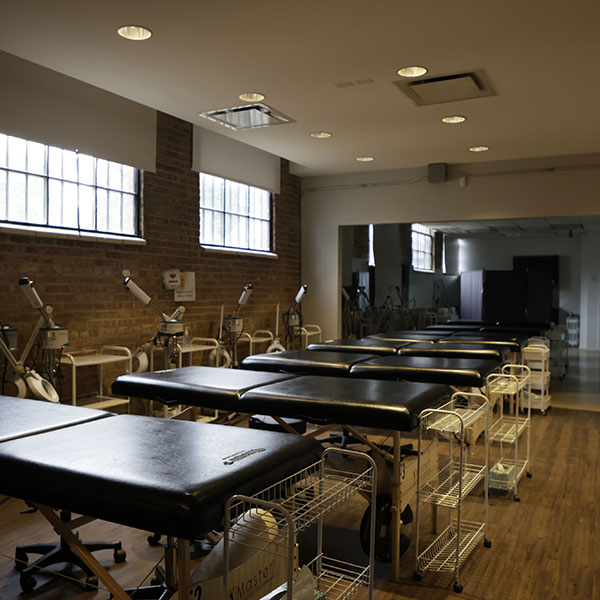
Tricoci University’s program runs in phases, with students advancing into the on-campus clinic salon as they build foundational skills. Wisconsin’s program is 600 hours, well above the 450-hour state minimum, because those extra 150 hours go toward clinic time.
Scheduling for People Who Can’t Quit Their Job Yet
Walking away from your current income before you’re ready to isn’t a plan. Tricoci University offers day and evening class options with flexible scheduling built for students who are still working, class schedules vary by location.
New classes start every six weeks, so you don’t have to wait for a traditional semester. The part-time path runs nine months.
Career Support After Graduation
Career changers entering a new field don’t come with an existing professional network. Ask about job placement resources, employer relationships, and whether instructors are working practitioners before you commit to a program. Review what career support is actually offered, not just listed.
If the numbers make sense and the path feels right, the next step is finding out whether the program fits your schedule, your finances, and your goals.
The Esthetics Program at Tricoci University of Beauty Culture offers full-time and part-time options across Illinois and Indiana, with new classes starting every six weeks and financial aid available for those who qualify.
Reach out today to talk through your options with an admissions advisor.
Frequently Asked Questions
How much do estheticians make in Illinois?
Illinois estheticians earn a median of $45,330 per year according to BLS OEWS data as of May 2025, with the middle 50% falling between $40,340 and $47,360. That’s above the national median of $41,560 for skincare specialists as of May 2024.
How long does esthetician training take in IL, IN, or WI?
Illinois requires 750 training hours, Indiana requires 700 training hours, and Wisconsin’s state minimum is 450 hours. Tricoci University’s Esthetics program can be completed in 20 weeks as a full-time student or 34 weeks as a part-time student.
Can you attend esthetician school while working full-time?
Yes. Tricoci University offers full-time and part-time options, with new classes starting every six weeks. The part-time schedule runs nine months and is built for students who need to keep working during training.
What certifications help estheticians earn more?
Dermaplaning, advanced chemical peels, microdermabrasion, LED therapies, and laser certifications open access to higher-paying clinical and medical settings. These are add-ons after the core license and typically require additional training beyond what esthetics school covers.