


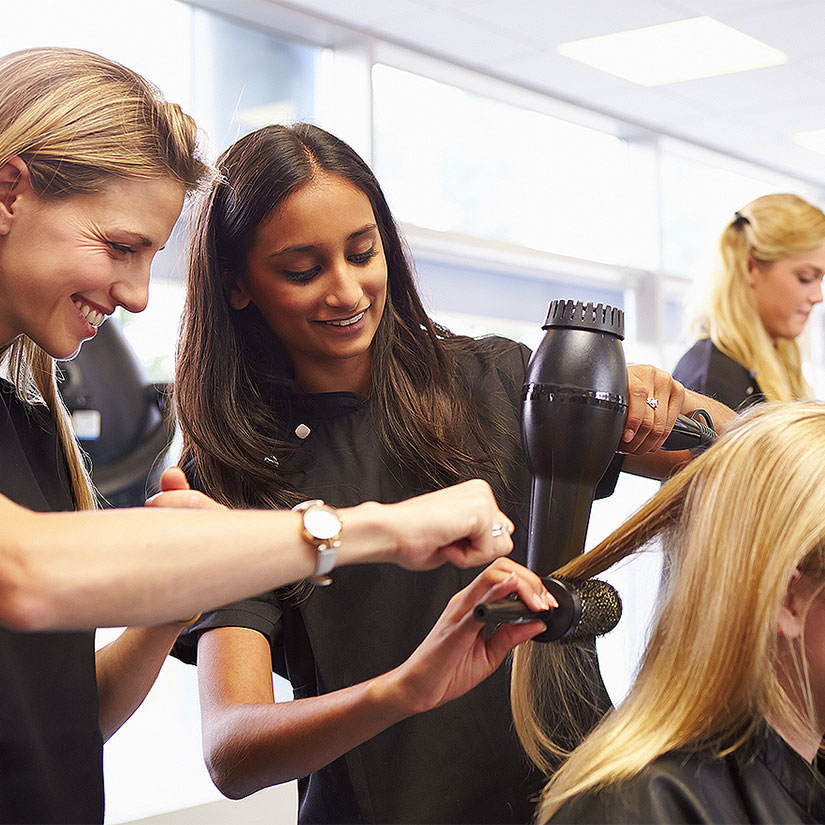
Esthetics and cosmetology have some similarities, but they are not the same thing. Choosing the wrong one based on a fuzzy idea of what each covers can cost you real time and money. They both lead to a licensed career in beauty.
That’s where the similarity ends.
If you’ve been doing hair, skin, or nails informally and you’re ready to make it official, the first step is understanding what each program actually trains you to do. The esthetician vs. cosmetologist question comes down to focus: skin science on one side, a broader creative range across hair, color, and services on the other.
What Does an Esthetician Do?
Esthetics is built around the skin. A licensed esthetician is trained to perform a defined set of skin-focused services, including facials, cleansing, exfoliation, waxing, body treatments, body wraps, and hydrotherapy. Makeup application and cosmetic hair removal, like brow shaping and lip waxing, also fall within the scope.
What the license does not cover matters just as much.
An esthetician license does not authorize you to cut, color, or chemically treat hair, or to perform nail services. The scope is narrower by design because going deep into the skin is the whole point. The Esthetics program covers what the full curriculum prepares you to do.


Where estheticians work varies, but common settings include:
- Day spas and resort spas
- Medical spas (within physician-supervised limits)
- Skincare clinics and dermatology offices
- Salons that offer facial and waxing services
Practitioners who want to go deeper have room to do it. Esthetics opens doors to oncology esthetics, advanced chemical exfoliation, and lash work. Chemical peel techniques are one example of how far skin science goes in this field.
If you want to learn more about becoming an esthetician, that breakdown walks through the full path from the Esthetics Program to license.
What Does a Cosmetologist Do?
Cosmetology covers more ground. A cosmetology license authorizes you to perform a broad range of beauty services, including hair cutting, coloring, chemical treatments, styling, makeup application, basic skincare, and nail services. The Cosmetology Program centers on hair, with focused study of color chemistry, diverse hair types and textures, and chemical processes.
That breadth is what makes cosmetology different from esthetics. Not better. Different. If you want to move across disciplines in a single day, cut hair in the morning, run a color correction in the afternoon, and finish a bridal blowout before close, cosmetology gives you the license to do all of it.
Work settings for cosmetologists skew toward full-service salons, but the range extends to:
- Bridal and editorial work
- Cruise ships and resort properties
- Platform artistry and education
- Salon ownership
Training in lash extension techniques is an additional skill set cosmetologists can build on top of their core license work.
Where the Two Programs Overlap
The overlap between the Esthetics program and the Cosmetology program is limited. The table below shows where they share ground and where they split.
| Esthetics Program | Cosmetology Program | |
|---|---|---|
| Primary focus | Skin science and treatments | Hair cutting, coloring, and chemical services |
| Also covers | Makeup, waxing, body treatments | Basic skincare, makeup, nail services |
| Does not cover | Hair cutting, coloring, nail services | Advanced skin treatments |
| Typical work settings | Spas, skincare clinics, med spas | Full-service salons, bridal, editorial |
| Program length | Shorter (450–750 hours by state) | Longer (1,500–1,550 hours by state) |
| Specialization depth | Deep in skin; advanced esthetic techniques | Broad across hair, color, and services |
| State licensing required | Yes | Yes |
Where they diverge most is depth vs. breadth. A Cosmetology Program touches on skin and basic facial services, but does not train you to the level an Esthetics Program does.
Some professionals hold both licenses. You can complete one program, get licensed, work in the field, and return for the other whenever it makes sense.
Esthetics first is a common sequence for people who want a faster path to the floor. Cosmetology comes later for those who want to expand their scope.
Program Length and What It Means for You
Program length is one of the most concrete differences when comparing the esthetician vs. cosmetologist path. The hour requirements vary by state, but esthetics runs shorter across Illinois, Indiana, and Wisconsin.
At Tricoci University of Beauty Culture®, full-time cosmetology takes approximately 10 months to complete. Full-time esthetics takes approximately five months. If you want to be working with paying clients sooner, that gap matters.
Tricoci also exceeds state minimums for esthetics training in Indiana and Wisconsin.
The Indiana program runs 750 hours against a state minimum of 700. The Wisconsin program runs 600 hours against a state minimum of 450. Those additional training hours exist because more hands-on clinic time with real guests produces a more prepared graduate.
How to Choose Which Program Is Right for You
No one else can make this call for you. But there are patterns.
Esthetics
Most people who land on esthetics already know they’re drawn to skin, not hair. They want to go deep on one thing rather than broad across many. Day to day, that looks like quieter, more focused work with repeat clients, appointment-based care, and a pace that rewards attention to detail.
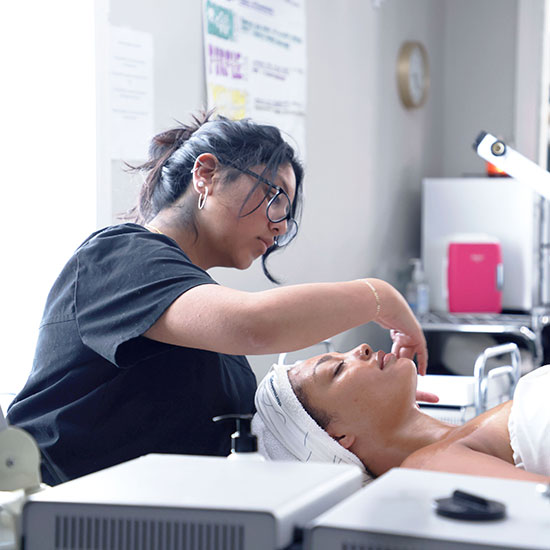
If you picture yourself in a spa or skincare clinic building long-term client relationships, that’s a signal. This overview of esthetics as a career covers both the benefits and the challenges, and is worth reading before you commit.
Cosmetology
Most people who land on cosmetology want range. They want to cut, color, style, and still have room to grow into new techniques. The environment matches that energy. Full-service salons move fast, cover a lot of ground in a single shift, and run on a rotating mix of services and clients.
You might shift between a cut, a color consultation, and a blowout without much downtime. If that sounds like the kind of day you’d actually enjoy, cosmetology fits that rhythm.
Getting licensed six months sooner means six more months of building a client base, developing your technique on real people, and earning. If time to your first professional paycheck matters, the Esthetics program gets you there faster in all three states.
Still undecided?
That’s more common than it sounds, and it doesn’t mean you’re not ready. A few things that can help:
- Think about the one service you’d do every day without getting tired of it. Is it a facial or a color? That answer usually points somewhere.
- Know that holding both licenses is possible. Some professionals complete the Esthetics program first for the shorter path to licensure, then return for the Cosmetology program later. Neither decision is permanent.
The program you choose matters as much as the credential itself.
Choosing a beauty school comes down to whether it’s state-approved, whether the hours meet or exceed state minimums, and whether you get hands-on clinic time with real clients rather than just classroom instruction.
Tricoci University of Beauty Culture® offers both programs at campuses across Illinois, Indiana, and Wisconsin. A few things worth knowing before you apply:
- New classes start every six weeks, so you’re not stuck waiting on a semester calendar
- Day and evening class options may be available for both programs
- Students receive a full kit on their first day, including professional tools
- Both programs include business and industry knowledge built in alongside technical training
Frequently Asked Questions
Can a cosmetologist perform esthetic services?
It depends on the state, but in Illinois, Indiana, and Wisconsin, cosmetology and esthetics are separate licenses with different scopes of practice. A cosmetology license covers basic skincare within its defined scope, but a full esthetics license is required to perform the complete range of skin treatments in all three states.
Which program takes less time to complete?
Esthetics in all three states. Illinois requires 750 hours for esthetics vs. 1,500 for cosmetology. Indiana requires 700 vs. 1,500. Wisconsin requires 450 vs. 1,550. Full-time esthetics at Tricoci takes approximately five months; cosmetology takes approximately 10.
Do both programs require a licensing exam?
Yes. Both cosmetologists and estheticians must pass a state board exam before practicing professionally. The format varies by state: some require a written exam only, others require both written and practical components. Your program prepares you for the specific format in your state.
Can you hold both an esthetics license and a cosmetology license?
Yes. You can complete one program, get licensed, work in the field, and return for the other. If you’re already licensed in another state and considering a move, Tricoci has resources on transferring an esthetician license and transferring a cosmetology license that cover what the process looks like in Illinois, Indiana, and Wisconsin.
Is beauty school considered a trade school?
Yes. Cosmetology school is a trade school, and so is an esthetics program. Both lead to a professional license through a structured, hands-on curriculum, the same model as other skilled trades. For anyone weighing a trade path against a four-year degree, the timeline and cost structure are worth comparing side by side.
If you’re ready to stop practicing on friends and start building something real, explore the esthetics and cosmetology programs at Tricoci to see which one fits where you want to go.