


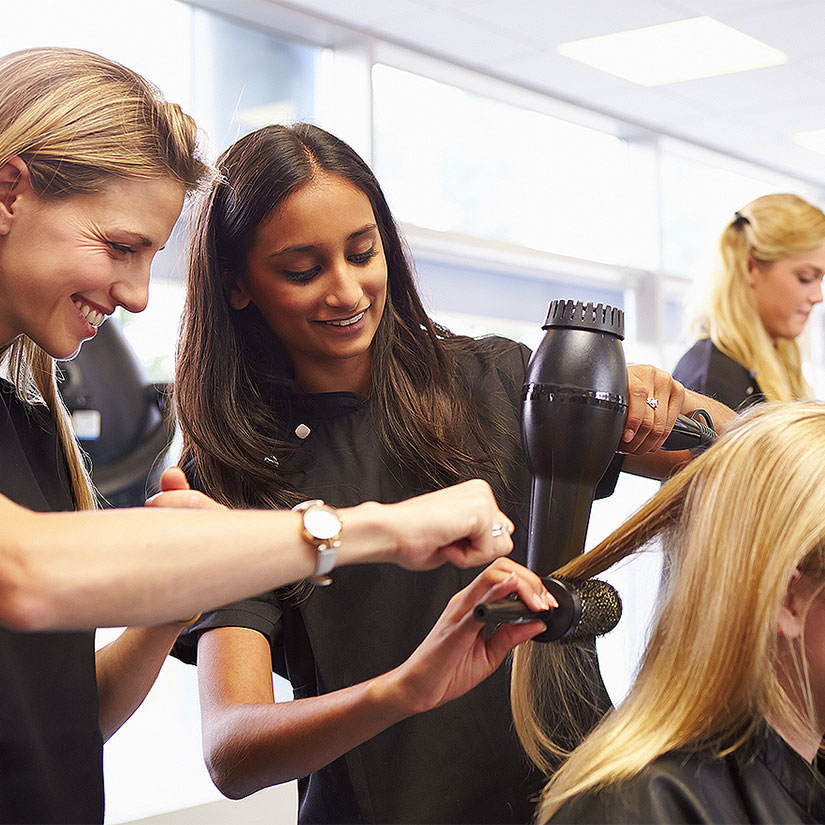
Introduced in 1985 as a gentler alternative to chemical peels and dermabrasion, microdermabrasion has become one of the most requested nonsurgical treatments in the country. A single session takes about 30 minutes and leaves skin smoother and brighter with no recovery time. For anyone training to become an esthetician, it is one of the first advanced treatments worth understanding in depth.
Estheticians who perform it well know exactly what the device removes, which skin types respond, and when another treatment is a better fit.
What Is Microdermabrasion
So what is microdermabrasion, exactly? It is a minimally invasive mechanical exfoliation treatment. A handheld device passes over the skin and removes the top layer, made up of dead skin cells, while the deeper layers stay intact. That is what keeps the treatment surface-level rather than medical, and it is also why so many clients respond well to it without any recovery time.
The treatment dates to 1985, when it was developed as a less aggressive option than a chemical peel or full dermabrasion. That origin still defines its place in skin care: an effective exfoliation step that suits a wide range of clients without downtime.
How Microdermabrasion Works
Two systems dominate the field, and estheticians train on both. Each pair abrades with suction, but they reach the skin differently.
Crystal Microdermabrasion
A crystal system sprays fine aluminum oxide crystals across the skin at a controlled rate while an attached vacuum suctions away the crystals and loosened dead skin cells in the same pass. The stream covers broad areas efficiently, though the loose particles call for care around the eyes and nose.


Diamond-Tip Microdermabrasion
A diamond-tip device replaces loose crystals with a wand coated in natural or synthetic diamond grit. It abrades the surface through direct contact, and a vacuum removes the debris. Because the system is particle-free, many estheticians prefer it for the control it gives near the eyes and on sensitive areas of the face.
The choice between them comes down to the client. Knowing which system suits which skin, and how many passes to make, is judgment built through supervised practice, not a setting read off a chart.
What a Microdermabrasion Facial Treats
A microdermabrasion facial pairs the exfoliation step with cleansing beforehand and a hydrating serum or mask afterward. Clearing that outer layer of dead skin cells does more than smooth the surface. It prompts the skin to renew itself, supports collagen production, and leaves a clean base that lets serums and moisturizers absorb more deeply. Clients book it to address several surface concerns:
- Dull tone and uneven texture, refreshed as the outer layer of dead skin cells comes away
- Fine lines, softened at the surface, though the treatment does not erase deeper wrinkles
- Mild acne and clogged pores, cleared through consistent exfoliation
- Hyperpigmentation and light scarring, improved gradually over a series of sessions
Results build with repetition. A single session brightens the skin, but most concerns like texture, pigment, and scarring respond best to a series spaced a few weeks apart, which gives the skin time to renew between treatments.
Part of an esthetician’s job is setting that expectation honestly, so a client understands the treatment as a plan rather than a one-time fix.
Risks, Side Effects, and Skin Types
Microdermabrasion is low-risk, but it is not free of side effects. The common reactions are mild and short-lived:
- Temporary redness that usually fades by the end of the day
- Mild sensitivity as the fresh surface adjusts
- Slight dryness or flaking in the day or two after a session
The skill is in screening. A trained esthetician evaluates the skin before treating and avoids microdermabrasion for clients with conditions it could aggravate:
- Active or inflamed acne, where abrasion can spread bacteria
- Rosacea and very reactive skin, which the suction and abrasion can irritate
- Open wounds, infections, or certain skin conditions that need a physician’s care
When a client presents something outside an esthetician’s scope, the right move is a referral. Recognizing those limits, and assessing skin type before every treatment is part of what separates trained estheticians from device operators.
Aftercare protects the result. Freshly exfoliated skin is more vulnerable to sun, so estheticians send clients home with clear guidance: daily sunscreen, no harsh actives or scrubs for a few days, and plenty of hydration. Coaching a client through that window matters as much as the treatment itself, and it is built into how the skill is taught.
Microdermabrasion Versus Chemical Peels
Both treatments exfoliate, but they work differently. Microdermabrasion is mechanical: a device physically removes the top layer of dead skin. A chemical peel uses acids to dissolve the bonds between cells and can reach deeper layers of the skin, which often means more recovery time.
That difference guides the recommendation. Microdermabrasion suits clients who want a surface refresh with no downtime, including those with sensitive skin who cannot tolerate strong acids. A peel suits deeper concerns like stubborn pigment or more pronounced scarring. Estheticians learn to read the skin and the goal, then match the method, and sometimes to combine the two across a treatment plan.
How Students Learn Microdermabrasion at Tricoci University
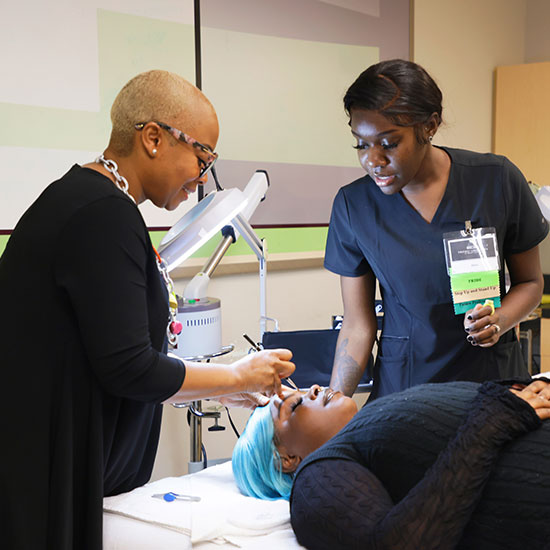
Microdermabrasion is a clinical skill taught inside a structured esthetics curriculum, not picked up from a video. Students study skin anatomy, sanitation, device handling, and contraindications before they ever pass a wand over a client’s face. From there, they practice on real clients in a supervised clinic, building the hands-on judgment the treatment demands.
Accreditation signals that a program meets a recognized standard. The National Accrediting Commission of Career Arts & Sciences (NACCAS) is recognized by the United States Department of Education as a national accrediting agency for postsecondary schools of cosmetology arts and sciences. NACCAS accreditation signifies that a program meets nationally recognized educational standards, while state licensing boards determine whether program hours satisfy licensure requirements, and those hour requirements vary by state.
At Tricoci University of Beauty Culture, esthetics students train across campuses in Illinois, Indiana, and Wisconsin, performing microdermabrasion and other treatments on real clients under instructor supervision.
Graduates leave ready to become an esthetician, sit for state licensure, and pursue certification in advanced skin care.
Start Your Esthetics Training
If microdermabrasion is the kind of work you want to do, the first step is formal training. Explore the esthetics program at Tricoci University of Beauty Culture, find a campus near you in Illinois, Indiana, or Wisconsin, and request information to talk with an admissions advisor about start dates.