

Skin care as a career covers a lot of ground. Some estheticians thrive in spas, building loyal client bases around relaxation and maintenance. And then there are those drawn to something more clinical, where the work sits closer to medicine than beauty, and the results go beyond a post-facial glow.
That is where medical estheticians come in.
For licensed estheticians who want to work alongside physicians, treat more complex skin conditions, and build a career in a fast-growing corner of the health care industry, the medical side of the field offers a path worth understanding.
What Is a Medical Esthetician
A medical esthetician holds the same core esthetics license as any other esthetician but also has a specialized designation and additional training that allows them to apply their skills in clinical settings. The focus shifts from relaxation to results such as:
- Managing skin conditions
- Prepping patients for procedures
- Supporting recovery afterward
The treatments tend to be more advanced and use medical grade products that are stronger than the retail lines found in a spa. A medical esthetician often works under the supervision of a physician, which expands the scope of what the role can address. Acne management, scar reduction, and pre-surgical skin conditioning all fall within the day-to-day work.
The title itself is not a separate license in most states. It describes an esthetician who has built advanced training and hands on experience in a medical environment. That distinction matters when you plan your path, because the route runs through esthetics licensure first.


Medical Esthetician Versus Traditional Esthetician
Traditional estheticians work in spas, salons, and beauty retail, where the goal is appearance and relaxation. They perform facials, waxing, makeup application, and routine skincare maintenance for clients who book by choice.
Medical estheticians work in clinical settings where the goal is skin health under medical oversight. The core license is the same, but the environment, the products, and the level of advanced training differ. A traditional esthetician answers to a salon owner; a medical esthetician answers to a physician and documents care the way a clinical team does.
Medical esthetics is best understood as a layer of specialization built on top of the standard license. The foundation is identical. What separates the two is where you work, who you work with, and how much advanced training you pursue after earning your credential.
Where Medical Estheticians Work
The setting defines the job. Medical estheticians are employed in dermatology offices, plastic surgery clinics, hospitals, and medical spas.
- Dermatology offices, supporting treatment of acne, rosacea, pigmentation, and other skin conditions
- Medical spas, which blend clinical procedures with a spa-style client experience
- Plastic surgery clinics, preparing patients before procedures and guiding skin recovery afterward
- Laser and skin-care centers, where advanced devices require trained operators
In each, the practitioner functions as part of a team.
Plastic surgeons and dermatologists rely on estheticians to handle skin conditioning, patient education, and the maintenance work that protects surgical results. That collaboration with medical professionals is what gives the role its clinical character.
What Medical Estheticians Do
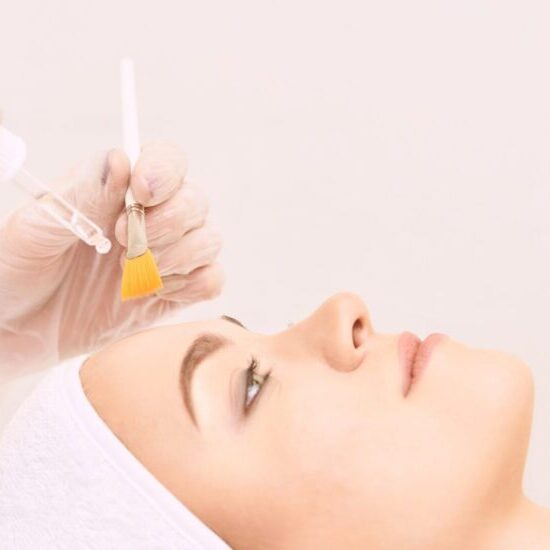
The daily work is hands-on and varied. Common responsibilities include:
- Performing chemical peels and microdermabrasion to treat texture, tone, and scarring
- Assisting with or performing laser treatments for hair removal, pigmentation, and resurfacing
- Conducting skin consultations and building medical grade product regimens
- Prepping patients before surgery and managing skin during recovery
Much of the value lies in judgment built through real world practice. Knowing which treatment suits which skin condition, and when to refer a patient back to the physician, comes from advanced training and time in clinical settings, not from a textbook alone.
How to Become a Medical Esthetician
Learning how to become a medical esthetician starts with the same credential every esthetician earns, then adds specialized experience on top.
Earn Your Esthetics License
The first step is completing a state-approved esthetics program and passing the state board exam. Accreditation signals that a program meets a recognized standard. The National Accrediting Commission of Career Arts & Sciences (NACCAS) is recognized by the United States Department of Education as a national accrediting agency for postsecondary schools of cosmetology arts and sciences. NACCAS accreditation signifies that a program meets nationally recognized educational standards, while state licensing boards determine whether program hours satisfy licensure requirements, and those hour requirements vary by state.
This license is the legal foundation. You can become an esthetician and work in a spa or salon with it, and it is also the entry point to medical work.
Pursue Advanced Training
Most medical estheticians enter the field by pursuing advanced certifications and seeking hands on experience in clinical settings after licensure. Some medical esthetician schools and continuing-education courses focus on laser safety, advanced peels, and medical-grade modalities. Others learn on the job, training under physicians and senior staff inside a dermatology office or medical spa.
There is no single shortcut. Employers in medical esthetics value certification, demonstrated skill, and the kind of real world judgment that develops with experience. Building toward the role means stacking advanced training on a solid license.
Medical Esthetician Salary and Job Outlook
The Bureau of Labor Statistics groups estheticians under skincare specialists and reports a national median salary of $41,560 a year, or about $19.98 an hour, as of May 2024. Medical settings may sit among the higher-paying environments in the field, so a medical esthetician salary often runs above that median, though exact pay depends on location, experience, and employer.
Three factors move the number most:
- Setting: plastic surgery and dermatology practices typically pay more than spas
- Experience: advanced certifications and years on the job raise earning power
- Location: metro areas and certain states pay well above the national figure
The outlook is strong. The Bureau of Labor Statistics projects 7 percent growth for skincare specialists from 2024 to 2034, faster than the average across all occupations, with roughly 14,500 openings each year.
Start Your Path to Medical Esthetics
A medical esthetician career starts with one step you can take now: earning your esthetics license. Explore the esthetics program at Tricoci University of Beauty Culture, find a campus near you in Illinois, Indiana, or Wisconsin, and request information to talk with an admissions advisor about start dates.