



If you have ever walked out of a facial and thought your skin looked better than it had in years, there is a good chance dermaplaning was involved. It is one of those treatments that delivers results clients can see and feel immediately, which is exactly why it has become one of the most requested services in modern skin care.
For estheticians, it can be one of the most satisfying skills to master.
The skin naturally sheds dead cells, but not always efficiently. Over time, those cells collect on the surface, creating a dull, uneven texture that also acts as a barrier to whatever products sit on top of it.
What Is Dermaplaning
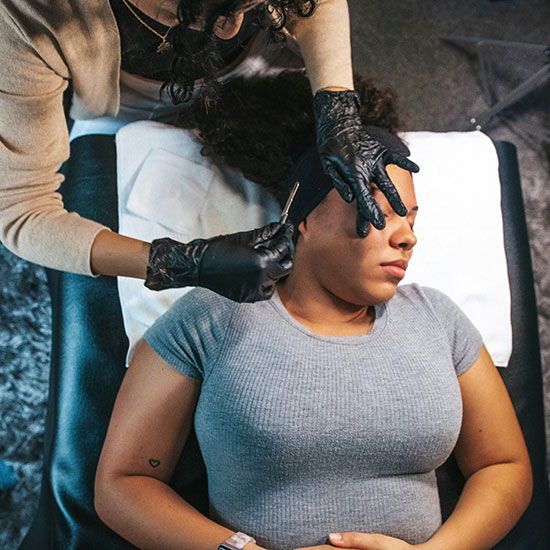
Dermaplaning is the removal of peach fuzz and dead skin cells. Estheticians use a sterile surgical blade to reveal the fresher, smoother skin underneath the dull surface layer. Because exfoliated skin may absorb active ingredients more effectively, clients may notice their serums and moisturizers working better in the weeks following a session.
A dermaplaning facial does not cut through living tissue, alter hair follicles, or change the skin’s natural cell turnover cycle. Vellus hair grows back with the same texture and color as before, and dead skin cells will accumulate again over time.
That natural cycle is also why many clients treat dermaplaning as a regular part of their skin care routine rather than a one-time fix.


How a Dermaplaning Treatment Works
Dermaplaning is non-invasive, which means clients can walk out and go straight back to their day. No needles. No extensive recovery periods. And, when done right, no pain. Someone can book a session on a lunch break and show up to their next meeting with glowing skin.
A typical session goes like this:
- The esthetician starts with a thorough cleanse to clear any makeup, oil, or debris.
- Once the skin is clean and dry, they hold it taut with one hand and guide the blade with the other in short, controlled strokes.
- Pressure, angle, and direction shift depending on the area. The jaw needs a different approach than the cheeks or forehead.
- The session wraps with a serum, moisturizer, and SPF to protect the freshly treated skin.
The whole process takes 30 minutes to an hour. Most clients describe the sensation as light scratching across the skin. Because the surface layer has been cleared, the skin is more sensitive to sun exposure right after, so leaving without SPF is not ideal.
Benefits of Dermaplaning
The benefits of dermaplaning are visible right away and build with repeat sessions. Clients notice three changes most often:
- Smoother texture and brighter tone. Clearing dead skin cells reflects more light off the surface, so skin looks more even and awake.
- Softer fine lines. Exfoliation does not erase fine lines, but it reduces the shadow that settles into dry, flaky skin around them.
- Better product and makeup performance. With peach fuzz and dead skin removed, foundation sits flat instead of catching on stray hairs, and skin care penetrates more deeply.
Dermaplaning also pairs well with other treatments. Performed before a light chemical peel, it lets the peel solution reach the skin more evenly. An esthetician trained to sequence these services gives clients results that neither treatment delivers alone.
Risks and Side Effects
No cosmetic procedure is free of side effects, and dermaplaning is no exception. The common reactions are mild and usually fade within a day or two:
- Temporary redness across treated areas
- Slight sensitivity as the fresh surface adjusts
- Occasional small breakouts while the skin settles
The skill is in knowing when not to perform it. A trained esthetician screens for conditions that make dermaplaning a poor fit:
- Active acne, because dragging a blade across inflamed breakouts can spread bacteria and worsen the condition
- Raised acne scars and certain rashes, which call for caution or a different approach
- Very reactive or compromised skin, which may need a gentler method
When a client presents a condition outside an esthetician’s scope, the right move is a referral to a board certified dermatologist.
Aftercare matters as much as technique. Freshly treated skin has lost its outermost protective layer, so it burns more easily. Estheticians coach clients to wear sunscreen daily and skip harsh actives for a few days. Training programs cover these contraindications in depth, because a confident “no” protects both the client and the practitioner.
Dermaplaning Versus Other Exfoliation Methods
Dermaplaning is one of several ways to exfoliate, and estheticians choose among them based on the client’s skin type and goals:
- Dermaplaning is mechanical and immediate, scraping away dead skin and the only method that also removes facial hair, with no downtime.
- Chemical peels use acids to dissolve the bonds between dead cells, working through the upper layers of skin to treat tone and texture at a slightly deeper level, with some recovery time.
- Microdermabrasion blasts the surface with fine crystals or a diamond tip to sand away dead skin.
Each suits a different client. Sensitive or pregnant clients who cannot use strong acids often do well with dermaplaning. Someone targeting deeper acne scars or pigment may need a peel. Knowing which to recommend, and when to combine them, separates a skilled esthetician from a technician following a script.
Learning Dermaplaning in an Esthetics Program
Dermaplaning is a clinical skill taught inside a structured esthetics curriculum, not something learned from a video. Students study skin anatomy, sanitation, blade handling, and contraindications before practicing on live clients in a supervised clinic. That progression, theory first, then guided hands-on work, is how a beginner becomes a provider clients trust with a blade near their face.
Accreditation signals that a program meets a recognized bar. The National Accrediting Commission of Career Arts & Sciences (NACCAS) is recognized by the United States Department of Education as a national accrediting agency for postsecondary schools of cosmetology arts and sciences. NACCAS accreditation signifies that a program meets nationally recognized educational standards. State licensing boards, separately, determine whether a program’s hours satisfy licensure requirements, and those hour requirements vary by state.
Tricoci University of Beauty Culture trains esthetics students across campuses in Illinois, Indiana, and Wisconsin, with clinic floors where students perform treatments on real clients under instructor supervision. Graduates leave with the technique, the judgment, and the credentials to help become an esthetician and pursue state licensure.
Last Words
If dermaplaning is the kind of work you want to do every day, the first step is formal training. Explore the esthetics program at Tricoci University of Beauty Culture, find the campus nearest you in Illinois, Indiana, or Wisconsin, and request information to talk with an admissions advisor about start dates.
 Call
Call Apply
Apply Programs