

Cosmetology school, sometimes called beauty school, is a licensed trade program that trains students to perform hair, skin, and nail services and prepares them to pass a state licensing exam. In Illinois, that means 1,500 hours of instruction and hands-on training before you can be licensed. The payoff is a credential that opens a career in the beauty industry, earned in about a year rather than four.
What Is Cosmetology School
Cosmetology school teaches the full range of beauty services under one program, then readies graduates for licensure. Unlike a four-year degree, a cosmetology program is built around hands-on training: you spend most of your hours practicing real techniques on mannequins, fellow students, and eventually paying clients on a supervised clinic floor.
A quality program includes three things every prospective student should look for:
- Instruction from experienced instructors who hold active licenses and industry experience
- A curriculum that meets state requirements for the licensing exam
- Enough hands-on experience to leave school job-ready, not just exam-ready
The goal of attending cosmetology school is not only to pass a test. It is to walk onto a salon floor with the speed, judgment, and client skills that employers expect on day one.
What Is a Cosmetologist
A cosmetologist is a state-licensed professional trained to provide hair, skin, and nail services. The license is broad, which is what separates cosmetology from narrower specialties like esthetics or nail technology.


A licensed cosmetologist can perform:
- Hair cutting, coloring, styling, and chemical services
- Skin care services such as facials, waxing, and makeup application
- Manicures and pedicures, plus nail enhancements
That range is what makes a career in cosmetology flexible. Graduates work in salons, spas, barbershops, and resorts, or rent a booth and build an independent client base. Some specialize in color or cutting; others move into salon management, education, or product sales. One license, many directions.
What You Learn in Cosmetology School
The curriculum blends classroom theory with supervised practice. What you learn in cosmetology school covers every service a licensed cosmetologist is allowed to perform, which is why the training hours run high.
Core areas of study include:
- Hair cutting and styling: cutting, coloring, permanent waving, chemical relaxing, and thermal styling across hair types and textures
- Skin care: facials, waxing, makeup application, and superficial exfoliation
- Nail technology: manicures and pedicures, nail enhancements, and nail health
- Sanitation and safety: disinfection, infection control, and chemical handling
- Business skills: client consultation, retailing, and salon operations
Theory anchors the science behind each service, but the hours that matter most are spent doing the work. A program includes a student kit, professional tools, and time on the clinic floor so skills become second nature before graduation. Tricoci University’s cosmetology curriculum breaks down each module in detail.
Hands-On Training and the Clinic Floor
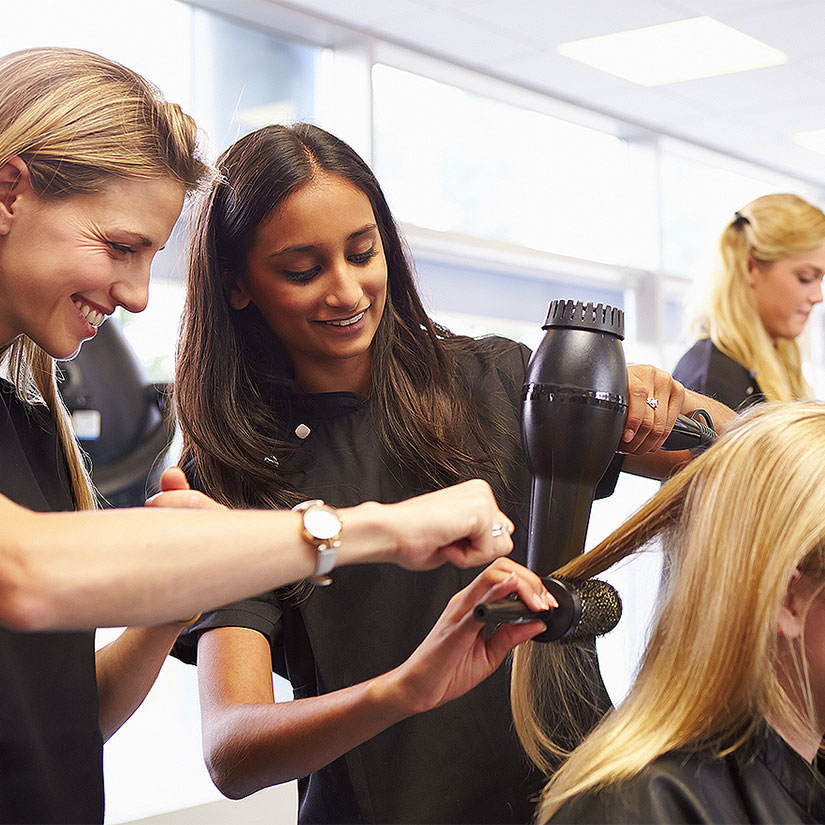
Hands-on training is the core of any cosmetology program. Early on, students practice on mannequins and each other. As skills build, cosmetology school students move to the clinic floor, performing services on real clients under the supervision of experienced instructors.
That progression matters because salon work is fast and personal. Delivering manicures and pedicures, color corrections, or skin care services to paying clients builds the consultation skills, speed, and confidence that no textbook can teach. By the time students complete cosmetology school, they have logged real hands-on experience with a book of practice clients behind them.
Training With Real, Industry-Standard Products
Hands-on repetition means more when it happens with the same products graduates will use on the job. Tricoci University partners with Amika, bringing the brand’s professional haircare line, including dry shampoos, treatments, and styling products, directly into classrooms and student salons across all 15 campuses.
Larry Foster, Chief Operating Officer at Tricoci University of Beauty Culture, said the partnership gives students exposure to the kind of salon-quality products they will encounter throughout their careers, building the technical skill and product knowledge employers look for on day one.
That kind of exposure matters because clients expect a cosmetologist to already know their way around professional-grade tools and products, not learn on the job. Training on real industry lines while still in school closes that gap before graduation.
How Long Is Cosmetology School

How long is cosmetology school depends on your state and your schedule. States set the required training hours, and cosmetology is one of the longer beauty programs because the license covers so many services.
- Illinois: 1,500 training hours, required by IDFPR before licensure
- Full time: 10 months at Tricoci University, on a full time daytime schedule
- Part time: 17 months on a part time evening schedule, built for students who work during the day
Full-time students move through the hours faster; part-time and evening schedules let students keep working while they train. Either path ends at the same place: enough hours to sit for the state licensing exam. Tricoci University’s flexible schedule options include day, evening, and part-time formats that vary by campus.
Cosmetology License and State Requirements
Finishing your hours is step one. Getting licensed is step two, and the state requirements govern both.
To earn a cosmetology license in Illinois, you must:
- Complete 1,500 hours at an IDFPR-licensed cosmetology school
- Pass the state licensing exam, which includes a written theory portion and a practical demonstration
- Submit your application and fees to the Illinois Department of Financial and Professional Regulation
Requirements vary by state, so hours and exam formats differ across Illinois, Indiana, and Wisconsin. Accreditation matters here too. Tricoci University is nationally accredited by the National Accrediting Commission of Career Arts & Sciences, Inc. The National Accrediting Commission of Career Arts & Sciences is recognized by the United States Department of Education as a national accrediting agency for postsecondary schools and departments of cosmetology arts and sciences and massage therapy, including those offered via distance education. This meets the federal standard for Title IV financial aid eligibility, so students can use Pell Grants and federal loans to help cover tuition. Tricoci University’s admissions and financial aid team can walk through the options.
Is Cosmetology School Worth It
For students drawn to creative, hands-on work, cosmetology school offers a fast, licensed route into a career in the beauty industry. The field rewards skill and initiative rather than seat time in a lecture hall.
Reasons prospective students choose cosmetology:
- Speed to earning: a licensed professional in about a year, not four
- Licensure protection: a state license keeps unlicensed competitors out of the work
- Flexibility: salon employment, booth rental, freelance, or business ownership
- Room to specialize: color, cutting, skin care, or nail technology, with advanced training to raise earning potential
A cosmetology license is a portable, practical credential. It travels with you, adapts to how you want to work, and gives you a foundation to build a long career on. For students who would rather learn a skill and start earning than sit through years of general education, that trade-off is the whole appeal.
Start Your Cosmetology Career at Tricoci University
Now that you know what cosmetology school involves, the next step is choosing where to train. Tricoci University of Beauty Culture offers full-time and part-time cosmetology programs at 15 campuses across Illinois, Indiana, and Wisconsin, with hands-on clinic training, experienced instructors, and state board exam preparation built in. Explore the cosmetology program and request information to talk with an admissions advisor about start dates, financial aid, and the campus nearest you.
 Call
Call Apply
Apply Programs